20 August 2006

Assignment of IP Rights, Room for Uniformity

During the upcoming AIPPI Congress 2006 in Gothenburg one of the more interesting subjects to be discussed is the question related to assignments of IP rights (Dutch Group).

IP rights are frequently used as security to enable financing of business ventures. However how does this work out for th different countries? What are the effects on third parties like banks and financial institutions? One of the essential characteristics of IP rights - and economically important - is their ability to be used commercially by assignment or licensing.

32 National groups, mostly consisting of IP practitioners and scholars, have prepared their national reports, answering several questions on how assignments in their respective countries work. For the results go to www.aippi.org, follow "Questions and Committees", then under "The scientific work of AIPPI, click "working committees", and look for Q190 ("Contracts regarding Intellectual Property Rights (assignments and licenses) and third parties"), click "Q190, then follow "Group Reports".

For a recent decision in The Netherlands on this subject (District Court Utrecht, 30 November 2005, IER 2006, 24 with a Note of Severin de Wit (full text in Dutch can be found at www.kluwer.nl (subscription required):

[quote]
Noot

Rechters zijn niet altijd gecharmeerd van 'proefprocedures' waarbij eiser en gedaagde een gekunsteld 'conflict' voorleggen om zo aan een in de praktijk bestaande - of, zoals de rechtbank in deze zaak aangeeft, vermeende - onduidelijkheid een einde te maken. Partijen in deze zaak maken het echter minder bont dan destijds partijen die de rechter in een civiele zaak een conflict voorlegde over de koop van een aantal juridische boeken onder de ontbindende voorwaarde dat de koop zou zijn ontbonden "als op 1 februari 1985 vaststaat dat de regering tot plaatsing van kruisraketten besloten heeft (…)" (Rb. Arnhem 24 oktober 1985, NJ 1986, 31 (m.nt. WLH)).

In de huidige zaak spande eiser, naar thans algemeen bekend zal zijn, Dick van Engelen, advocaat te Utrecht, deze proefprocedure aan om een, naar zijn oordeel in de praktijk voorkomende, onzekerheid via de rechter opgehelderd te krijgen. De vragen die aan de orde gesteld worden zijn (1) of de rechten op de VENTOUX-merken al dan niet registergoederen in de zin van art. 3:10 Burgerlijk Wetboek zijn, en (2) of de rechten op het Gemeenschapsmerk (c.q. -aanvrage) overdraagbaar zijn naar Nederlands recht, aangezien daarvoor ingevolge art. 3:83 lid 3 BW een 'wet' vereist is, die 'bepaalt' dat die rechten overdraagbaar zijn.Beantwoording van genoemde vragen zou raad bieden als men in de praktijk voor de vraag staat of voor het vestigen van een zekerheidsrecht op (b.v) een merkrecht met het maken van een pandakte kan worden volstaan of dat daar - in licht van de door Van Engelen aangezwengelde discussie - een akte van hypotheek aan te pas moet komen en, als dat laatste het geval is, hoe dan te handelen met de voorgeschreven inschrijving in het register? Volgens De Boer ( IER 2003, p. 141) stuit men in de praktijk op problemen om een notariële akte ter zake van IE-rechten, die mogelijk registergoederen zijn, te (doen) passeren omdat het notariaat in voorkomend geval daaraan geen medewerking verleent, simpelweg omdat de mogelijkheid tot inschrijving van die akte in een door de wet daartoe aangewezen openbaar register ontbreekt. Van Engelen is van mening dat IE-rechten geen registergoederen zijn en dat een Gemeenschapsverordening kwalificeert als 'wet' in de zin van art. 3:83 lid 3 BW. Probleem is echter dat, zegt Van Engelen, andere interpretaties van het wettelijk systeem niet bij voorbaat kunnen worden uitgesloten, wat tot problemen leidt bij transacties - zoals overnames, financieringen en beursgangen - waar de vraag opdoemt of de IE-rechten wel rechtsgeldig zijn overgedragen. Ook in geval daarover een opinion moet worden afgeven kan dit, nog steeds Van Engelen, leiden tot het moeten opnemen van allerlei mitsen en maren. Vandaar dat Ventoux - het advocatenkantoor van Van Engelen - stelde er (ook) belang bij te hebben dat (tevens) wordt uitgemaakt dat - indien de merkrechten op VENTOUX (wel) registergoederen zijn - die rechtsgeldig kunnen worden overgedragen bij wege van notariële akte en inschrijving van die akte in de desbetreffende registers voor Benelux- en Gemeenschapsmerken.

Zie over deze discussie in IER: Van Engelen, "Intellectuele eigendomsrechten registergoederen?", IER 2002, p. 275-281. Een reactie van De Boer, "Naschrift bij de recentelijk verschenen artikelen omtrent zekerheidstelling op IE-rechten - hoe verdere hoofdbrekens te voorkomen?", IER 2003, p. 141. Domingus, "Inschrijving van IE-rechten en rechtshandelingen betreffende IE-rechten: het blijft een lastig vraagstuk", IER 2003, p. 142-145 en een nawoord van Van Engelen, "Nawoord bij reacties Domingus & De Boer", IER 2003, p. 145-146.

De omstandigheid dat in de literatuur onzekerheid bestaat vormt naar het oordeel van de rechtbank een onvoldoende belang. De rechters leiden uit de door (eiser) overgelegde stukken af dat de door partijen bedoelde onzekerheid in de literatuur ' overigens aangezwengeld door (eiser) zelf' - zoals de rechtbank eraan toevoegt - niet zozeer bestaat ten aanzien van de wijze van overdracht, maar ten aanzien van de vraag of het recht een registergoed is in de zin van art. 3:10 BW en of de verordening een wet is in de zin van art. 3:83 lid 3 BW. De rechtbank geeft hierop geen antwoord omdat hij van mening is dat partijen onvoldoende belang bij hun vorderingen hebben. Partijen zijn in hoger beroep, dus we wachten af.

SdW
[unquote]

13 August 2006

FTC: Rambus patent standard setting contravenes US antitrust laws


On August 2, 2006 The Federal Trade Commission unanimously decided that computer technology developer Rambus, Inc. engaged in a course of deceptive conduct that distorted a critical standard-setting process, resulting in an unlawful monopoly in the markets for four computer memory technologies relating to dynamic random access memory, or DRAM. DRAMs are memory devices that store and process information and are found in personal computers, servers, handheld devices, printers, and digital cameras throughout the world.

In an opinion by Commissioner Pamela Jones Harbour, the Commission found that Rambus’s conduct constituted deception in violation of Section 5 of the FTC Act and that this deception contributed significantly to Rambus’s acquisition of monopoly power in the four relevant markets in violation of Section 2 of the Sherman Act.

BACKGROUND
In June 2002, Commission staff filed a complaint against Rambus alleging that Rambus manipulated and deceived an industry-wide standard-setting organization, the Joint Electron Device Engineering Council (“JEDEC”) with the intent to obtain market power. According to the staff’s complaint, Rambus participated in JEDEC’s DRAM standard-setting activities for several years without disclosing to JEDEC or its members that it was actively working to develop, and possessed, a patent and several pending patent applications that involved specific technologies ultimately adopted in the standards. The complaint also alleged that Rambus waited until the industry had begun manufacturing DRAMs that complied with JEDEC standards to enforce its patents, resulting in Rambus’s acquisition of durable market power in violation of the antitrust laws.

The complaint was litigated in an administrative trial before Chief Administrative Law Judge (“ALJ”) Stephen J. McGuire. In February 2004, Judge McGuire dismissed the charges against Rambus, finding that Complaint Counsel had failed to establish that Rambus had any obligation to disclose its patents to JEDEC during JEDEC’s standardization of DRAM. see Full Docket at FTC website).

COMMISSION DECISION
The opinion of August 2, 2006 overturns Judge McGuire’s decision. Using the framework articulated by the D.C. Circuit Court of Appeals in U.S. v. Microsoft, 253 F. 3d 34 (D.C. Cir. 2001), the Commission found that “Rambus withheld information that would have been highly material to the standard-setting process within JEDEC,” and this course of conduct constituted deception under Section 5 of the FTC Act: Rambus’s conduct was calculated to mislead JEDEC members by fostering the belief that Rambus neither had, nor was seeking, relevant patents that would be enforced against JEDEC-compliant products. Rambus’s silence, in the face of members’ expectations of disclosure, created a misimpression that Rambus would not obtain and/or enforce such patents. When suspicions arose, Rambus allayed them with the reminder that it had made a prior disclosure. The message that Rambus reasonably conveyed was that Rambus would have disclosed anything if it had had anything relevant to reveal.

Overturning Judge McGuire’s findings, the Commission found that Rambus did have an obligation to disclose the existence of its patents to JEDEC. While the Commission acknowledged that the rules of JEDEC and its parent, the EIA, “are not a model of clarity,” the rules imposed a duty of good faith that suggested that disclosure of relevant patents was expected. This interpretation of the rules was reinforced by testimony of other JEDEC members that indicated that members understood that the disclosure of patents and patent applications was expected and examples of members actual disclosing patents and patent applications relating to developing standards.

The Commission found that Rambus failed to inform JEDEC that the patents covered the proposed DRAM standards and that Rambus intended to enforce these patents. Consequently, the Commission determined that “we find nothing in the record to suggest that, in the cooperative environment prevailing at JEDEC, the incidents to which the ALJ and Rambus have pointed were sufficient to put JEDEC members on notice that Rambus would pursue a deceptive course of conduct to obtain patents covering JEDEC’s standard, then engage in patent hold-up to extract royalties on terms of Rambus’s choosing.”

The Commission determined that this deceptive conduct contributed significantly to Rambus’s acquisition of monopoly power in violation of Section 2 of the Sherman Act. By hiding the potential that Rambus would be able to impose royalty obligations of its own choosing, and by silently using JEDEC to assemble a patent portfolio to cover the SDRAM and DDR SDRAM standards, Rambus’s conduct significantly contributed to JEDEC’s choice of Rambus’s technologies for incorporation in the JEDEC DRAM standards and to JEDEC’s failure to secure assurances regarding future royalty rates – which, in turn, significantly contributed to Rambus’s acquisition of monopoly power.” Moreover, the Commission found that alternative technologies existed that JEDEC could have standardized, but that Rambus’s deceptive skewed JEDEC’s ability to objectively determine the appropriate standard.

There was evidence that Rambus engaged in the destruction of documents, an issue that Rambus is currently litigating before other federal courts. However, the Commission refused to impose any sanctions for Rambus’s spoliation of documents in light of its finding that Rambus violated the antitrust laws.

The Commission ordered additional briefings to determine the appropriate remedy forRambus’s violations. In its complaint, FTC staff had sought a royalty-free license for Rambus’s patents for SDRAM and DDR SDRAM, while Rambus had sought licensing on reasonable and non-discriminatory (“RAND”) terms. It is likely that the Commission may not issue a decision regarding remedy until early 2007.

In addition to ordering Rambus to provide either a royalty-free or RAND license to SDRAM and DDR SDRAM, the Commission may also order Rambus to disgorge any profits obtained from its unlawful conduct. Moreover, although the Commission found that the industry was not locked in to subsequent generations of SDRAM that are currently in the market, i.e., DDR2 SDRAM, DDR3 SDRAM, and DDR4 SDRAM, the Commission may apply its remedy to these evolutionary technologies as a “fencing-in” provision. Such provisions have been used in technology markets where the technology in dispute becomes obsolete during the litigation and the Commission determines that the remedy must be applied to future generations of the technology in order to effectively remedy harm to consumers.

(source: (c) April J. Tabor, McDermott, Will & Emery)

Patent Trolls: one more time


On Friday December 8, 2006 a conference will be held in London (Crowne Plaza Hotel), organised by IBC UK Conferences, Informa UK Ltd.

"Patent trolls: a pejorative or deserved epithet? Examining the phenomenon from both sides".

Speakers are:

  • Ken Adamo, partner, Jones Day, US
  • Robert S. Bramson, Bramson & Pressman , US
  • Dr. George M. Calhoun, Executive-in-Residence, Wesley J. Howe School of Technology Management
  • Peter Detkin, Cofounder and Managing Director, Intellectual Ventures (formerly Patent Counsel, Intel), US
  • Dr. Elliot Fishman, Industry Associate Professor, Wesley J. Howe School of Technology Management
  • Charles P. Gilliam, former General Counsel, Content Guard, UK
  • Rt. Hon. Lord Justice Jacob, Court of Appeal, UK
  • Toshimoto Mitomo, Vice President, Intellectual Property Department, Sony Corporation of America, US
  • Louis Lupin, General Counsel, Qualcomm, US
  • Prof. Dr. Christian Osterrieth, partner, Reimann Osterrieth Köhler Haft, Germany
  • David Perkins, partner, Milbank, Tweed, Hadley & McCloy LLP, UK
  • Jan Willems, Enlarged Board of Appeal, EPO, Germany
  • Severin de Wit, partner, Simmons & Simmons, Netherlands
(see blog posts on Sisvel and Sandisk about IFA seizures)
“Aside from the mythology involved, one way to look at the troll situation is that you have 'bad patent trolls,' on the one hand, and 'bad patent thieves,' on the other.” (source: ThinkExist.com)

ECJ brings end to Cross Border Practise in Netherlands and Germany


On 13 July 2006, the long awaited decisions of the European Court of Justice (ECJ) were given in the cases of GAT v LuK and Roche v Primus. To the disappointment of some, the ECJ appears to have prohibited cross-border relief, bringing the Dutch and the German patents courts (which were willing to grant such relief in certain circumstances) in line with the English patents court (which has always refused to grant such relief). However, the decisions are such that both the Dutch and German patents courts may continue to grant cross-border relief in certain circumstances. Whether they do so or not, will have to be seen. However, the decisions will undoubtedly provide further impetus for many in industry to call for a centralised European Patents Court to be established as soon as possible, enabling parties to litigate European patents on a Europe-wide basis. see for full analysis: Simmons & Simmons

Not everyone is convinced GAT v. LUK and Roche v. Primus made an end to possibilities for cross border relief in Netherlands, as Prof. Willem Hoyng writes in his comment on both cases (in Dutch), see: www.boek9.nl

Ariad v Lilly, a "a drug pathway" patent dispute


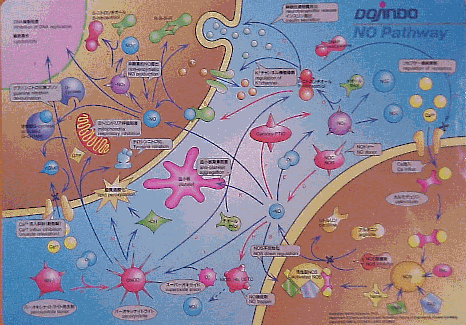
In May 2006, a jury in the U.S. District Court of Massachusetts in Boston issued an initial decision in the case of Ariad Pharmaceuticals et al v. Eli Lilly and Company. The federal jury's verdict is that U.S. Patent No. 6,410,516, owned by Harvard, the Massachusetts Institute of Technology, and the Whitehead Institute and licensed to Ariad Pharmaceuticals, is valid and infringed by Lilly's sale of Evista(R) and Xigris(R). Ariad, based near Boston, sued Indianapolis-based Lilly, accusing the larger company's drugs Evista and Xigris of infringing the patent on its experimental drug pathway, NFkB. The patent covers a method of treating disease by regulating a certain type of cell activity. The patent is on a an experimental drug, AP23573, covering a method of treating soft-tissue and bone cancers. Critics question the validity of the drug’s patent because it attempts to protect the process in which the drug works, not the drug’s chemical composition.

However, jurors in U.S. District Court in Boston agreed with Ariad, slapping Lilly with $65 million in damages in May.

"In my more than thirty years of experience in patent law, which includes involvement in dozens of patent lawsuits, I've never seen a jury verdict with which I so strongly disagree; the finding of infringement stands at odds with the most basic premise of the patent system. If practicing technology that's already known, and therefore is old, infringes a patent, the inventor hasn't properly limited the patent to technology that is new," said Robert A. Armitage, senior vice president and general counsel for Lilly.

This decision appears to go against long-standing patent practice in that one cannot get a patent that would remove known materials from the public. In addition, it has always been the case that one may patent a drug without knowing how it works. If this decision were allowed to stand, many drugs could eventually be found to infringe patents that were issued long after the
drugs themselves were discovered. This also begs the question of if a researcher discovers a drug without ever knowing the drug acts on a patented pathway or before the pathway is
understood, does that constitute infringement? If the drug was acting on the pathway before the pathway was discovered, does the existence of the drug invalidate the patent on the pathway by rendering it not "new"? This could also give rise to an ever-increasing number of conflicting patents. Because NF-kB can activate so many genes, more than 150, it is implicated in many diseases. A separate bench trial with the U.S. District Court of Massachusetts has been held last week (August 7) on Lilly's contention that the patent is unenforceable and will also consider the patent's improper coverage of natural processes. In June 2005, the U.S. Patent and Trademark Office commenced a reexamination of the patent (Reexam. C.N. 90/007,828). The reexamination is currently in progress.

From: Patent Baristas (blog by Stephen, May 4, 2006), CNN Money, August 4, 2006,

27 May 2006

Why chasing grandma to combat counterfeit is wrong


On April 19 and 20 Seoul, Korea hosted the International Conference on Customs Protection and Enforcement of IP. As the title suggests the main theme was the increasing number of counterfeited goods in the world market and the efforts of right holders and customs to combat these knock offs. On the menu were lots of presentations lamenting about an enhanced counterfeit industry, China and India being the great sources of counterfeit and Louis Vuitton bragging about their success in making new laws in Italy fining tourists coming back home with a counterfeit Vuitton bag. However, as is often the case with IP conferences on counterfeits, new ideas or innovative ideas were scarce, I would say absent). Mainly songs being sung for years, that counterfeit is on the rise, that customs needs to get even more officers to combat the increase in counterfeited products. No one denies that counterfeit is a serious problem. However, water flows to the lowest point: right owners seem to think that aiming the end-user of the counterfeited products is part of the solution. Fine the user or buyer of counterfeited goods. This tendency of right owners to take the easiest way – aim at the end of the production line, the consumer – is a dangerous one. Not only is it unfair to attack the old lady buying a Gucci bag on a popular market in Florence and fine here for 5,000 euro –a practice that is said to take place in France and Italy, initiated by the LVMH’s of this world - it further undermines the public’s trust in the working of intellectual property. IP is already under serious attack (pharmaceutical industry by failing to making expensive medicines available to countries in need using their IP to block such attempts, music industry associations serving thousands of court complaints writs against young downloaders of online music, anti IP feelings against rules protecting software solutions, you name it. In a time when many feel that IP is stifling innovation rather than promoting it, it’s a dangerous policy to go after the users of counterfeited goods. Why not concentrating on the transport sector, shipping companies that ship the counterfeited goods. That’s is more likely to give great success. Manufacturers in China may be difficult to trace and once traced, they disappear equally easy as they have been found. So one end of the production line, the manufacturers, is difficult, the other end –the consumer, is dangerous. So how to combat counterfeit? By setting up a compliance program together with the shipping industry. Taking the low margins for container handlers, a container with counterfeited goods that is being held in Rotterdam harbor upon entering the EU, is a headache and a financial burden for the shipping company. So they would be more than willing to think how to cooperate with right owners to fight where it is most effective: at the point of transport: e.g. Chinese harbors, points where goods are being shipped to the rest of the world. If right owners provide for the shipping companies means to easy detect and remove counterfeited products –and such techniques are widely available – combating counterfeit will become more successful and consumers do not need to be bothered.

09 May 2006

ECJ SPC Judgement in Re: MIT


Last Friday, May 5, 2006, the ECJ gave its judgement in Massachusetts Institute of Technology (C-431/04) concerning SPC (supplementary protection certificates) and the meaning of "combination of active ingredients" in article 1(b) of EU Regulation 1768/92.

The ECJ did not follow the Opinion of Advocate-General Léger of on 24 November 2005.

The Issue
The drug in question had two elements: an active ingredient, carmustine, and a polymeric, biodegradable excipient, polifeprosan. The national (German) courts held that no SPC could be granted for carmustine on its own since that active ingredient was already covered by a marketing authorisation and had been for a long time.

MIT had also requested that an SPC be granted for carmustine in combination with polifeprosan, arguing that the drug used the excipient as a necessary form of administration of the active ingredient in order to avoid toxic effect. Effectively, did use of this excipient together with the active ingredient amount to a combination of active ingredients? This was the issue referred to the ECJ by the German courts.

The Judgment
In a concise, 32 paragraph, judgment, the ECJ ruled that:

“Article 1(b) of Regulation 1768/92 must be interpreted so as not to include in the concept of “combination of active ingredients of a medicinal product” a combination of two substances, only one of which has therapeutic effects of its own for a specific indication, the other rendering possible a pharmaceutical form of the medicinal product which is necessary for the therapeutic efficacy of the first substance for that indication.”

This goes against A-G Léger's Opinion who advised that:

“The concept of “combination of active ingredients of a medicinal product” within the meaning of Article 1(b) of Regulation 1768/92 must be interpreted as meaning that it does not preclude the grant of a supplementary protection certificate to a combination of two substances, one of which is a known substance with pharmacological properties of its own for a specific therapeutic indication and the other is necessary for the therapeutic efficacy of the first substance, for this indication.”

The Questions Referred
The questions referred by the German Bundesgerichtshof were:

1. Does the concept of “combination of active ingredients of a medicinal product” within the meaning of Article 1(b) of Regulation [No 1768/92] mean that the components of the combination must all be active ingredients with a therapeutic effect?

2. Is there a “combination of active ingredients of a medicinal product” also where a combination of substances comprises two components of which one component is a known substance with a therapeutic effect for a specific indication and the other component renders possible a pharmaceutical form of the medicinal product that brings about a changed efficacy of the medicinal product for this indication (in vivo implantation with controlled release of the active ingredient to avoid toxic effects)?

11 April 2006

What has a Patent in common with a Rembrandt?

When Rembrandts painting “Portrait of a Lady” was auctioned in London for U$28.7 million, many believed it was actually the auction fever that made prices reach incredible levels, driven up by eager art buyers and sellers looking for scarce supply of high quality art. Everything has been auctioned, from art, old cars, vintage Cartier watches to emission rights. However patents – monopoly rights granted by the state in exchange for publication of the invention - have not, so far.

On April 6 the first ever public auction of patents was held in San Francisco where over 400 inventions were being auctioned. The eagerly awaited auction attracted a large crowd of people from all over the US and Asia. Major absentee was Europe, with just a few German and Dutch IP investment ventures present. The auction was organized by Ocean Tomo of Chicago, and sponsored by various companies. Representatives of several large companies attended the auction, including GE, Microsoft, DuPont, and AT&T. A seasoned London based auctioneer, Charles Ross, mastered the auction.

Many believe the creation of an open, transparent market for intellectual property will cause a rippling in the way companies, universities as well as individual patent owners will trade their technologies, making valuation more visible and, as a consequence, will ultimately attract Wall Street type of investment funds and will eventually make similarly smart financing of intellectual property rights possible.

Sellers, ranging from individuals to richly awarded inventors with their own access portfolios eager to make some money to large companies like Kimberly-Clark, Motorola, Ford Motor Company and Allied Signal offered their patents on this first public auction. Patents covered a wide variety of technologies: video-on-demand technology, a suite of patents for varying the valve timing in car engines, as well as a solution for online sales of fashion goods were among the intellectual property rights sold. Lot 30A, a movie compression patent by Douglas Ballantyne, for moving a film to TV through cable, shot to $650,000, stalled, rose to $1 million with two bidders left, closing at $1.4 million. The catalogue-listed value for the patent was $2 to $5 million. The price values set by the auction organizers ranged from below 100.000 to 5,000,000. The most expensive lot, more than 35 patents from Ford Motor Company, was withdrawn at the auction for lacking to reach the reserve.

So what does a Rembrandt art piece has in common with a patent when it comes to auction it? Not much we have to conclude after last week’s experiment. The result is at best mixed. Patents have not yet reached celebrity status. More than 400 patents went on the block in 74 lots, of which around 22 lots were sold. Total sales at the auction reached US$ 3 million. From the 52 lots that did not reach the seller’s minimum, some were offered in post-auction private trading, reaching terms off the bidding floor with an additional value of U$ 5,6 million. Many patents sold, however, did not reach more than US$ 10-12,000.

Frequently the auctioneer had to cheer up the crowd as bidding became dreary, except for some action from patent trolls, or IP fund managers as they would rather like to call themselves. “Tire-kickers”, not actual buyers dominated the scene. Actual sales were all from absentee bidders. The auctioneer occasionally mentioned “interest” or even “large interest”, only backed by absentee bidders. Much of the bidding from those absentee bidders did not result in an actual successful sale of most of the patents. Most of the sellers as it turned out during the auction process set minimum prices, or “reserves” in auction speak. The valuations – as were published in the glossy prospectus - were high, much too high as it turned out. Together with the unrealistic reserves set by patent owners, many lots had to be withdrawn from the auction as the bids – either from absentee bidders or buyers in the auction crowd - were not high enough to reach the minimum price the seller told the auctioneers they were prepared to sell their patents for.

Success can be measured by different standards. If one looks at the lots sold, the patent auction was disappointing. Judged which patent caused the highest bid, the US$ 1.4 million was far less than the US$ 15.5 million Commerce One patents reached in a bankruptcy auction in 2004. As an experiment it is surely trendsetting in that it is the first event where the market agreed on prices for a wide variety of technology and gave many spectators a flavor of value of technologies offered. The organizers will most probably change to outside valuators rather than using their own valuation methods. A further auction is planned for New York in autumn 2006. Europe will no doubt follow, but it requires a different approach if it wants to be a success, given the different patent culture in Europe.

01 April 2006

Will the eBay debate in the US has a similar impact in Europe?


Corporate America celebrated when the international agreement on Trade-Related Aspects of Intellectual Property Rights (TRIPS) went into effect Jan. 1, 1995. Many companies believed TRIPS would go a long way toward protecting their IP rights overseas. Patent owners were especially happy with a provision that requires countries to grant patent injunctions when requested. Many high-tech companies soon wished that provision had never made it into the treaty. Such a company is eBay.

Last week the US Supreme Court heard a case between eBay and MercExchange on an important question: should patent-owners in patent infringement cases be entitled, virtually “automatically” as eBay lawyers put it, to an injunction? Or should judges have discretion to decide what remedies fits the infringement, taking into account the harm caused and the larger public interest? Ebay was found by lower courts to have infringed two e-commerce patents owned by MercExchange, a small technology company. They concern the "buy it now" feature on its site, which allows users who do not want to take part in an auction to buy an item at a fixed price. A US District Court declined to issue an injunction and awarded MercExchange damages instead. The Federal Court of Appeals (CAFC, Washington) overturned this decision and ruled that patent holders had the right to an injunction barring exceptional circumstances.

The case has dramatically divided the patent community. Technology companies have supported Ebay's case before the Supreme Court arguing that patent cases are stifling innovation. Pharmaceutical companies however have been arguing the opposite. In a brief to the court, they say limiting injunctions and weakening patent laws would drive up the cost of innovation.

The case has attracted large media attention not least because eBay spared no effort nor money to make its case. A record number of 37 amicus briefs were filed, ranging from IP practitioner groups, industry associations, numerous law professors (on either side of the arguments), IT and pharma & biotech companies and even representatives of what some would call “patent trolls”.

Financial Times editorial comments called upon the Supreme Court to “restore some sanity to the system” referring to the Blackberry case where an owner of a single patent, with no business of himself, almost shut down the successful Blackberry wireless email handheld business. Financial Times went as far as saying that the case could be “crucial to the future of US innovation: the near-automatic right to an injunction creates a severe imbalance of power within the patent system” by referring to patent trolls as a major problem in the US patent system (owners of patents that do not have any business other than to assert it against users of the patent to extract royalties). This is nothing but short of gross exaggeration and is certainly not true for all industries. In the pharmaceutical and biotech industry a patent protects the vast sums of that went into innovative R&D . New therapies are not introduced to patients until the often several hundred million dollar regulatory process has confirmed that a new chemotherapy or antibiotic is both effective and will not harm the patient. Absent an iron-clad exclusive right guaranteed by the patent, new drug development by the private sector would wither as the grant of a compulsory license would destroy the profit incentive so vital to induce pharmaceutical concerns to invest the vast sums needed for regulatory approval.

One would argue how come this is not a similar big issue in Europe? Most European patent laws are based on the understanding that the right to exclude others is the fundamental right of a patentee. An patent right provides its owner an exclusive right to an invention he made. If this invention for which a patent has been granted is being infringed, an injunction against the party infringing the patent owner’s exclusive right to manufacture and dispose of a patent is the only effective remedy to restore exclusivity. Exclusivity is what the party who innovated requires to earn back his R&D investment. An exclusive right would be meaningless without the right to exclude. Injunction and exclusivity go therefore hand in hand.

In most patent countries of the EU a court ordered injunction is granted unless specific circumstances are shown that do not justify an injunction, like public health. Many EU countries give the patent owner the choice either to go for an injunction per se, an injunction as well as an order to pay damages, or, alternatively, only for damages. Refusal to injunction amounts to a compulsory license, which can only be granted in exceptional circumstances, according to most current European patent laws. But that may chance. The current stream of hostilities to Intellectual property rights may spark a similar debate as in the US in the eBay case.
It is fair to say that the fierce eBay debate in the US will soon be mirrored in Europe where patent quality has been a recent issue as well (“trivial patents”). The consultation round initiated by the European Commission and closed on March 31 will show whether the current debate in the US will be followed by an equally fierce debate on patent quality and the effects of patents on innovation in Europe.

23 March 2006

French legislative initiative on online music distribution stifles innovation


French Parliament currently debates a new digital copyright law that could have major implications for the online music distribution industry, most notably the most innovative company in this industry, Apple.

Not only is the new law confusing, it signals a dangerous development in Europe that once a company is successful in the market, be it Microsoft with its OS and add-ons like Media Player or Office software, or Apple with its very successful on line music retail formula, it gets punishment rather than applause.

There is an alarming tendency in Europe to denounce those who are successful, and thus stifling rather than promoting innovation. This should be of great concern to all who want Europe to be a innovative economic climate (even if Europe already gave up to be "the most competitive economy, also know as the “Lisbon” strategy.

The proposed bill would force change in the business model that sparked the revolution in legal digital music downloads. It seeks, in part, to require Apple's Computer's iPod digital music player to be able to play songs purchased from competing online services, not just from Apple's own iTunes Music Store. French Antitrust agency already cleared Apple from an alleged dominant position in November 2004. Yet, the French Parliament seems to know better what is good for competition.

One should be wary of politicians trying to tell the folks what is good for competition and what not. However, one could think that this is an isolated case, some French politicians who are ill informed, have no clue what sparks innovation (or simply do not care). This would be a dangerously underestimate the potential effects of this type of legislation. It should be of wide concern, as fear is justified that other European legislators will follow suit. This is more likely than ever, taken the current anti IP atmosphere in Europe these days. It is “bon ton” to denounce alleged “market dominators”.

Those voices always seem to stem from parties that are much less successful in the market.
Interoperability issues between portable music players such as the iPod and music download sites have arisen, and Apple has found itself accused of using anti-competitive tactics. Real Networks is a proponent of such allegations to anyone more successful than they are. Is it coincidence that this same company complained against Microsoft and is now taking on Apple as well? Real Networks sponsors a website that campaigns against “the status quo in digital music, which limits healthy, open competition”.

Real Networks obviously means to say they can’t compete and a cry for help seems to get a willing ear from the EU regulator (Competition authorities) and now again, from politicians, most notably French legislators.

It is about time we start thinking how we can enhance our lagging innovation in Europe. Time after time statistics show that Europe is dramatically lagging behind the US and China (Asia I would say). It is now time to act to stimulate not stifle innovation in Europe. The European Commission should warn France that the proposed legislation harms innovation, is contrary to free movement of goods (music), is against consumer interests and harms industry.

17 March 2006

Patents sold at Public Auction


On April 5, Chicago-based patent consulting firm Ocean Tomo LLC plans to hold a semi-annual patent auction at the Ritz Cartlon in San Francisco. The firm will offer for sale approx 400 patents pertaining to semiconductors, RFID, wireless communications, automotive technology, food, energy and the Internet. The patents will be grouped in 68 blocks ranging in estimated value from $100,000 to more than $5 million.The patents will be grouped into lots when they relate to a common area. Some lots will include additional material such as prototypes of products, inventor notebooks, and, in one case, 80 hours with the inventor to aid in transferring expertise. At the end of each auction, Ocean Tomo will get 25% of the sale price.

The offerings include patents for Motorola bar code technologies and biochip technology, patents for a Clorox bleach activator and a Ford four-wheel steering system. Also included will be patents from Kimberly-Clark on a new shrink-wrap that the company has decided not to commercialize, as well as 20 patents issued to BellSouth in areas that are no longer part of its core business, such as search-engine technology.

The complete list (310 pages) of patents may be purchased from Ocean Tomo here. Of course, in one of Ocean Tomo's previous auctions, the infamous 39 patents from CommerceOne were sold for $15.5 million. These patents were perceived to be so broad that they had a potential to cause major havoc in the Internet industry if they fell into the "wrong hands" (read: a patent holding company). Eventually it was learned that Novell purchased the patents under the pseudonym "JGR Acquisitions" to prevent such companies from getting their hands on the patents.While no such patents have been identified (yet) among the patents to be auctioned, concerns are growing whether a similar scenario can play out. A number of high profile holding companies are expected to attend the upcoming auction, and it is anyone's guess who will be buying what.Regardless of what you may think about some of the bidders, Ocean Tomo is staking out some revolutionary territory in the areas of patent valuation and patent commerce. Instead of relying on labor-intensive licensing and litigation tactics, the bidding system created by Ocean Tomo will likely create an active trading market (the company even referred it to being the "EBay of IP") for moving IP assets into the stream of commerce).

See also: CNet News

(source: Peter Zura’s patent blog, http://271patent.blogspot.com/)

04 March 2006

EPC 2000 will come into force on 13 December 2007


On 13 December 2005, Greece became the fifteenth Contracting State of the European Patent Convention to deposit its instrument of ratification or accession for EPC 2000. Fifteen was the magic number required to start the clock ticking and EPC 2000 comes into force, at the latest, two years from that date.

Should all Contracting States deposit their instruments of ratification or accession before September 2007, EPC would come into force on an earlier date - the first day of the third month following the last Contracting State's deposit. According to Article 172(4) EPC, a Contracting State that has not ratified or acceded to the EPC 2000 at the time of its entry into force shall cease to be party to the EPC as from that time.

The EPO website has a good section on the EPC 2000, including


  • the full text of EPC 2000
  • results of and papers from the November 2000 conference
  • traveaux preparatoires from 1997 leading up to the conference
  • transitional provisions
  • implementing regulations
  • schedule of Contracting States accession and ratification
What changes does EPC 2000 introduce?

The provision of EPC 200 include:


  • Methods of treatment or diagnosis. In particular A second medical use can be patented using a straightforward claim. Using a "Swiss-type" claim is still allowable.
  • Changes to the rules on post-grant amendment and the introduction of the concept of central limitiation at the EPO
  • The extent of protection conferred by European patents is strengthened by expressly including so-called "equivalents".
  • There are various amendments to simplify and streamline the EPO's patent grant procedure. For example, it will be possible to file patent applications in any language, since a translation into one of the official languages of the EPO will not be required until a later date. During the procedure itself, applicants will benefit from improved protection against inadvertent legal consequences arising from the non-observance of time limits.
  • All EPC states will be deemed to be designated at the date of filing, although any designation may be withdrawn up until grant of the European patent

(source: Peter Hill, Simmons & Simmons, London)

19 February 2006

Ever called "simply an unsatisfactory expert"? (Judge Pumfrey, UK)


Research in Motion UK Ltd v Inpro Licensing SARL Patents Court, Febr. 2, 2006.

An interesting case on anticipation and enablement, patentable subject matter and some comments on when to use the “streamlined procedure” before the Patents Court in the UK. Most notably also for Pumfrey J strong observations about Inpro's expert and his lack of objectivity, describing him as "simply an unsatisfactory expert".

Inpro is the proprietor of a patent relating to various ways in which web pages can be *pre-treated* before being downloaded to machines of modest processing capacity. Claimant is the UK subsidiary of the makers of the BlackBerry device (RIM) and seek revocation of the patent on the grounds of anticipation or obviousness. RIM also argues, inter alia, that the invention consists of a computer program and method of displaying information which subject matter is excluded from patentability pursuant to s 1(2) of the UK Patents Act 1977 (equivalent to art 52 (2) EPC, exemption for computer program “as such”). Inpro counterclaimed for infringement.

Inpro’s patent is declared invalid for anticipation (counterclaim dismissed). The judge holds that there are two aspects to an allegation of anticipation. For a prior documentary disclosure to anticipate, it has both to disclose the invention and enable the skilled man to perform it. In cases of anticipation by inevitable result, the prior art discloses those things which, if the skilled man did them, would fall within the claim. If the skilled person was given a target, in the shape of a disclosure of the invention, the law of enablement permitted reasonable experimentation and error correction while still holding that the prior disclosure was enabling. If the only target the skilled man was given was a course of action, then following that course of action would inevitably result in something within the claim, and there was no space for experimentation except in getting what was disclosed to work in accordance with the terms of the prior document.

The claim that the invention lays in excluded subject matter, failed. The right approach to determining whether material is excluded pursuant to s 1(2) of the 1977 Act was for the court to take the claims of the patent, correctly construed, and consider what the claimed invention contributed to the art outside the excluded subject matter. That test was to be applied on a case-by-case basis and little benefit was to be gained by drawing analogies with other cases decided on different facts in relation to different inventions.

Streamlined Procedure
In 2005, Laddie J had made an order for a trial according to the streamlined procedure. Pumfrey J disagrees with Laddie J's proposition that once a party to an action proposes the use of the streamlined procedure, that procedure will be used in the absence of a convincing objection from the other. "The decision to use the streamlined procedure is an objective one to be arrived at on all the material. There are no presumptions. It is not unusual in patent actions for one or (sometimes) both parties to consider that their case is both straightforward and easy to try. They are often wrong: and in any event, the dissentient must be allowed a proper opportunity proportionate to the matters at stake fairly to put its case, and that may preclude use of the streamlined procedure. Speed is highly desirable in all cases, but not at the expense of fairness. One relevant factor is the commercial importance of the patent."

Peter Hill, Simmons & Simmons


07 February 2006

UK Patent Office launches Consultation on Inventiveness


On Feb. 6 the UK Patent Office launched a consultation on the inventive step requirement in UK patent law. Responses from interested innovators, scientists, engineers, businesses and legal professionals are requested by 31 May 2006.

What is the purpose of the consultation?

The overall context is to consider: how well the current legislation maximises innovation and competitiveness whether too many "trivial patents" are being granted or whether innovation and competitiveness is best served by easy patenting with low hurdles? In particular, respondents are being asked to consider:

How the inventive step requirement is used in the UK patent system and how its use compares to other countries. And whether its parameters in the UK are set appropriately with respect to:


** the objectives of the legislation
** the impact on the role of the patents system in the economy
** the effect on third parties
** consistency and harmonisation with other countries,
** patent quality
** whether any aspect of the inventive step requirement should be modified.

If the consultation results in any change to the UK regulatory framework, it is considered that the most feasible way to implement such a change would be by amending the Patent Rules.

Why is this consultation being launched now?

There has already been speculation on this point. The consultation paper itself states that a review is timely partly because it is now some time since the introduction of the Patents Act 1977 but also because the inventive step concept has recently been the subject of debate and investigation abroad which has raised serious issues of patent quality and concerns over the issue of so-called "trivial" patents. It mentions in particular two recent reports in the US which discussed, inter alia, the influence that patent policy and competition can have on innovation and the balance to be struck between these influences and also circumstantial evidence of a drop in patent quality in the US. (Para 2.2 of the consultation document)

One of the reports discussed in particular the difficulties of applying the intentive step requirement to technologies such as biotechnology and gene sequencing. One will remember that the Gowers Review was set up by the Chancellor's Pre-Budget Report in 2005 to review the IP framework in the UK. However, the Patent Office materials do not say that this consultation is part of the Gowers review. It also seems slightly odd to consider amending this aspect of patentability unless other jurisdictions are doing the same.

A couple of points to note

"Trivial" Patents and Patent "Thickets". In the press release, the Chief Executive of the Patent Office, Ron Marchant, talks about the need to strike a balance for all businesses and innovators:

"An inventive step requirement which is too difficult for applicants to achieve can result in inventions that might deserve a patent not receiving protection, thus hindering the applicant in research and investment. However, the danger of an inventive step which is too easy to meet is that patents could be obtained for small changes or improvements which hamper the legitimate activities of third parties."

Obviously, the balance struck between these two extremes is of interest to our pharmaceutical clients in particular. In para 4 of Appendix A, the consulation specifically refers to allegations of the granting of “trivial” patents, particularly in "areas where the patenting of small incremental improvements allows the creation of patent thickets and portfolios designed to exclude competition to an unfair extent. The adverse effects of such situations are not limited to the constriction of competition in the home market, but are also particularly felt in developing countries that need access to patented medicines."

International Comparisons

Although the consultation asks for information on approaches taken in other countries, it also observes that there appears to be a wide measure of international agreement that the test for the presence of inventive step in s3 Patents Act 1977 (whether the invention is obvious to a person skilled in the art) is the appropriate basic requirement.

However, it also notes that several possible texts have emerged in international discussions on harmonisation in this area. These would require that:

** The person skilled in the art, having regard to any item(s) of prior art or common general knowledge would have arrived at the claimed invention (the European proposal).

**Any item(s) of prior art or common general knowledge would have motivated a person skilled in the art to reach the claimed invention (the Japanese proposal).

** Any item(s) of prior art or common general knowledge would have motivated, with a reasonable expectation of success, a person skilled in the art to reach the claimed invention (the American proposal).

Peter Hill, London

27 January 2006

Another episode of rotary shaver wars


One of Philips marketing success stories is the Philishave, the shaver with the well known three heads. Philips filed a trademark for this shape, consisting of the overall shape of an inverted equilateral triangle with three heads sitting within a raised faceplate of clover leaf design superimposed on the triangle. Remington, attracted by the success of the Philips rasor, also introduced the three headed rasor. A long trademark battle emerged.

On Jan. 26 the Court of Appeal in the UK upheld Judge Rimer’s first instance decision that the mark was invalid because it consisted of features of the shapes of the goods which were necessary to produce a technical result, Trade Marks Act 1994 s.3(2)(b).

However, the Appeal court overturned Rimer J's ruling that two device marks were invalid. The policy of the shape marks provisions was all important. The policy was that competition in the relevant market for the goods must not be impaired by the registration of the shape of goods so as to prevent others from selling products incorporating technical solutions or functional characteristics. There was no objection on that ground to the device marks. They were all images with eye appeal of an abstract, non-technical and non-functional nature. None of them were a "shape of goods" in the functional sense used in the Act and fell outside the competition policy of the shape mark provisions and outside the scope of the functionality principle embodied in Art 3(1)(e) Trade Marks Directive 89/104 and s.3(2)(b) of the Trade Marks Act 1994.

20 January 2006

Obviousness in England - Has the pendulum started to move?


On 18 November 2005 the English High Court (Christopher Floyd QC sitting as a Deputy Judge of the Patents Court) handed down its judgment in the case of Schering Plough v Norbrook Laboratories. The Court’s interpretation of the recent decision of the Court of Appeal in St Gobain v Fusion Provida suggests that the Patents Court’s attitude towards obviousness may be shifting in favour of the patentee. Following St Gobain the Court applied the test that the claimed invention was only ‘obvious to try’ where it was more-or-less self-evident that what is being tested ought to work. This indication that an ‘expectation of success’ has been re-introduced into the English law of obviousness should encourage patent holders.

Background

Norbrook Laboratories (Norbrook), the Irish pharmaceutical company, owns a European patent relating to a veterinary product comprising two medicaments, a long-acting antimicrobial and an anti-inflammatory drug, for the treatment of a range of infectious diseases in animals, including bovine respiratory disease. Schering-Plough (S-P) applied to revoke Norbrook’s patent alleging that it is both obvious in light of the common general knowledge and cited prior art and insufficient.

Facts

It was well known at the priority date to treat bovine respiratory disease concurrently with a long-acting antimicrobial drug and an anti-inflammatory (typically of the non-steroidal type). In addition at the priority date S-P marketed a combination product comprising a short acting formulation of an antimicrobial drug (oxytetracycline) and a non-steroidal anti-inflammatory (flunixin). According to the patent the object of the invention was to provide a “long-acting or single treatment formulation which has both antimicrobial and anti-inflammatory effect”. As well as providing a convenience benefit over existing treatment regimes the patent included data to show the advantages of a combination of long-acting oxytetracycline and flunixin over treatment with either drug alone.

Obviousness

S-P claimed that the patent was invalid for obviousness in light of both common general knowledge, principally S-P’s own pre-priority date short-acting combination product, and prior art publications reporting on the treatment of cattle with S-P’s combination product and concurrent therapy with a long-acting antimicrobial drug and an anti-inflammatory.
Following the structured approach to obviousness approved by the Court of Appeal in Windsurfing v Tabur Marine the Court identified the inventive concept of the patent and then asked whether the step between the prior art (or common general knowledge) was obvious to the skilled team. Importantly the Court found that the inventive concept was not just the idea of a combination product comprising both types of drug, but a combination product in which the long-acting effect of the antimicrobial drug was retained. This was considered to be implicit in claim 1 of the granted patent: “A method for producing an improved veterinary product comprising bringing a selected long-acting antimicrobial formulation into intimate admixture with…an anti-inflammatory agent…”.

The Court found that this was not a case where obviousness depends simply on whether or not it was obvious to have the bare idea of the combination (it being obvious to the skilled team that the idea, once it had been conceived, would work). In addition to establishing that the idea itself was obvious, S-P needed to show that it would have been obvious to go ahead and try the combination. In interpreting what ‘obvious to try’ means the Court followed the Court of Appeal in St Gobain where Lord Justice Jacob said that:

“The ‘obvious to try’ test really only works where it is more-or-less self-evident that what is being tested ought to work”

Thus to succeed on obviousness S-P needed to show not only that the idea of the combination was obvious but also that it would have been obvious to go further and test the combination in circumstances where it was “more-or-less self evident” that the long-acting effect of the antimicrobial drug would be retained in the combination product i.e. there needed to be an expectation of success.

The Court was satisfied that the data in the patent shows that the long-acting antimicrobial effect of Norbrook’s long-acting oxytetracycline product is retained when it is formulated together with flunixin in a single product and that this was an unexpected benefit. On the basis of expert evidence that interaction between the drugs could adversely affect their absorption and the action of both drugs the Court found that the skilled person would not have been able to predict this result. The Court concluded that the idea of combining a long-acting antimicrobial with an anti-inflammatory (i.e. trying to ‘update’ S-P’s earlier combination product by substituting the short-acting oxytetracycline with a long-acting formulation of the same drug) would have been obvious to the skilled team, but that it would have been “far from self evident” that such a product would work in the sense that the long-acting effect of the antimicrobial would be retained. Furthermore the skilled team would not have been able to predict whether or not the inclusion of an anti-inflammatory drug would compound the irritant effects of the long-acting antimicrobial. Notwithstanding that it would have been appreciated that the product would have utility if it did work it would not have been self-evident that the combination would work and so the combination product was not ‘obvious to try’. For these reasons S-P’s obviousness attack failed.

Insufficiency

S-P accepted the sufficiency of the specific combination of oxytetracycline and flunixin that is disclosed in the examples of the patent but challenged the broader claims that extended beyond that combination. Following the House of Lords decision in Biogen v Medeva, in which it was stated that “the specification must enable the invention to be performed to the full extent of the monopoly claimed”, the Court considered what ‘performing’ the invention actually means. Applying an even-handed approach to obviousness the Court found that for the patent to be sufficient the skilled person must be capable of making a combination of the two ingredients in which the long-acting antimicrobial effect is retained. The Court thought that it is inconceivable that all the combinations falling within the broad claims of the patent, covering essentially a combination of any long-acting antimicrobial and a non-steroidal anti-inflammatory drug, could be made to work (i.e. to retain the long-acting effect) without undue research or experiment. Norbrook argued that their patent disclosed a principle capable of general application and that following Biogen v Medeva the claims of the patent may be “in correspondingly general terms”. The Court did not accept that the patent disclosed a ‘class effect’ and applied the same reasoning as was used in Norbrook’s favour to establish an inventive step to support a finding of insufficiency. The Court said that:

“it is precisely because absorption in combination products is unpredictable that the claims need to be confined to those combinations which will work without undue research. The claims under consideration ware far too wide for that purpose”.

The fact that it was not self evident that the combination would retain its long-acting effect was fatal for sufficiency of the broader claims.

Commentary

The outcome of the case is that the claims covering long-acting oxytetracycline and flunixin (Norbrook’s commercial product) were held to be valid, but the more general claims covering other combinations of antimicrobials and anti-inflammatories were found invalid for insufficiency. The decision depended upon: firstly, an appreciation that the inventive concept was more than just the idea of bringing together the two active ingredients into a combination product; and secondly, application of the test for ‘obvious to try’ set out by Lord Justice Jacob in St Gobain. The conclusions of non-obviousness (of all claims) and insufficiency of the broader claims followed inexorably from that.

The findings of the Court in the present case appear to be in sharp contrast to the pre-St Gobain case of Cipla and Others v Glaxo, a ‘combination patent’ case with many parallels to the present one (in terms of the facts). In that case the patent was found to be obvious, Pumfrey J stating that:

“the combination was an obvious combination, as a combination. It was not obvious that it would be safe, or that it would represent any advance on what had gone before. Whether this would be the case depended upon the outcome of clinical trials which was not foreseeable…”.

As this extract demonstrates, prior to St Gobain there had been a marked shift away from the old test of whether something was obvious to try with a reasonable prospect of success. Just being ‘obvious to try’ had become enough. The fact that an ‘expectation of success’ was no longer being taken into account led to accusations that the UK’s approach to the law on obviousness was out-of-step with that applied in other jurisdictions (including the EPO, Canada, the US and Australia). For example in Canada in a series of recent cases including AB Hässle v Genpharm and Sanofi-Synthelabo v Apotex the English ‘worth a try’ test was rejected in favour of a test where “the person skilled in the art must be able to say that he or she would know that the invention would work and would have the benefits associated with the invention in light of the publicly available information” (Sanofi Synthelabo v Apotex). Similarly a comparative review of the Australian and UK authorities by the Australian High Court in AB Hässle v Alphapharm reached the conclusion that the Australian law of obviousness includes the requirement of an expectation of a useful result and therefore was at odds with the (pre-St Gobain) UK law.

Patent holders should be encouraged by the judgment in S-P v Norbrook and by the fact that an apparently simple patent covering a combination product was upheld on obviousness. It suggests that the pendulum has swung back in the patentee’s favour and that an expectation of success may once again be a component of the test for obviousness. It will be interesting to see how the other Patents Court judges interpret St Gobain and whether the interpretation of Christopher Floyd QC (sitting as a Deputy High Court Judge) in this case will be endorsed by the Court of Appeal. This decision is not being appealed so we will need to wait a while longer to find out whether or not Lord Justice Jacob intended the test of ‘more-or-less self-evident’ to be of general application.

In the meantime Patentees should take heart from what now appears to be an encouraging trend.

by Scott Parker, solicitor Simmons & Simmons London


19 January 2006

Consultation on Future Patent Policy in EU

The EU Commission is seeking views on the future of the European Patent system in a consultation procedure. Participants are asked to contribute before March 31, 2006.

17 January 2006

Is there a Future for the European Community Patent?


Recently it was announced that EU Commissioner McGreevy would like to make “one more, last (emphasis on “last”!) attempt to create a low-cost EU Community Patent". See Financial Times, January 16

It also seems that the Commission has become less hostile to progress on the alternative for the Community Patent, the European Patent Litigation Agreement (EPLA). On 16 January 2006, the Commission confirmed details of its public consultation on improving the patent system in Europe.

Background

The latest draft text of the EPLA and other key documents can be seen at
www.eplaw.org. The EPO website also has a goodish summary - but last updated 17 March 20005.

Recent Developments

1. A significant number of European patent judges made a statement in December 05 about the need for pan-European patent dispute resolution - in effect backing the EPLA in the absence of any progress on the Community patent.

2. The UK Patent Office recently published the
UK Statement at the Working Party on Litigation (13 December 2005). Inter alia, this says that "While the Commission continues to believe that the Community patent is crucial, another issue to be considered is improvement of the existing framework of the European Patent Office, specially the litigation arrangements. Our intention is as soon as possible to reach a position where a text can be put to a diplomatic conference. For this purpose, the Commission and member states plan to hold one or two meetings to discuss the technical issues relating to Community involvement in the EPLA."

3. At the EPO meeting, the Austrian Presidency publically confirmed that a meeting to further the discussion on the negotiating mandate was planned in April. Informally, the Commission have begun work on the details. The first very brief discussion in Brussels took place on 21 December 2005, discussing what would need to be covered by a negotiating mandate. The EPO Council agreed to schedule sub-group meetings to make any necessary changes to fit around that mandate in Summer/Early Autumn 2005 and a decision on the date of a diplomatic conference should be made no later than next December's Council (possibly next October.)

4. On January 16, 2006 , the Commission issued a
press release (IP/06/38) confirming details of its public consultation, which has a closing date of 31 March 2006.

The press release says that the consultation is on "how future action in patent policy to create an EU-wide system of protection can best take account of stakeholders' needs. While the Community Patent remains a priority, the Commission is also seeking views on what measures could be taken in the near future to improve the patent system in Europe. All interested stakeholders, including industry and individuals, are encouraged to reply."

The Commission, therefore, still clings to the goal of a Community Patent. However, in the light of the current inability of Member States to make any progress on it, the Commission is prepared to look at the EPLA as an alternative way to make practical progress on improving the patent litigation system in Europe.

So it seems that although the EU still has high hopes for the European Community Patent, the real future will show to be in the EPLA, whether McGreevy likes it or not. Political hurdles may have to be overcome for some Member States, but when McGreevy is finally convinced that the Community Patent is a dead end, he might throw in some more support for the EPLA .


14 December 2005

Patent Ambushing


Patent speak is constantly enriched. By now we know what Patent Trolls or Patent Vultures are, don’t we? In fairytales of Hans Christian Andersen these ugly creatures are portrayed as friendly or mischievous dwarfs or as giants, that live in caves, or under bridges and scare and threaten innocent by passers. In patent world we use the term for owners of patents that have no business other than ownership of patents for the sole purpose of going after parties whom they believe use the patented technology. They threaten to sue unless licenses are paid. Intel called them once 'Patent Extortionists' and had to fight off a libel suit.

In the meantime patent terminology becomes more and more belligerent. What to think of “patent ambushing” ? Pretty hefty, don’t you think? A “patent ambush” involves the ability of a company to turn its patented technologies into (technical) standards by withholding information on their patent claims with respect to a proposed standard from competitors (as well as the standard setting bodies and their participants).

The idea is to do whatever you can to make your proprietary technology the “standard”. That helps when you have to go after those who (must) use the standard to collect license fees. The “ambush” is that parties who are discussing which standard to select are “lured” into accepting a technology that is held (via patents) by one party, who actively takes part in the standard discussions, remaining silent on his own proprietary position.

An example. Intel recently called for the Institute of Electrical and Electronics
Engineers (IEEE) to drop its Ultra Wide Band (UWB) wireless networking standard and adopt Intel's own Wi-Media standard. As part of the campaign for adoption, the chip giant has taken its own standard to the more commercially friendly European Computer Manufacturers Association (ECMA), whose members are manufacturers rather than engineers, which has just rubber-stamped the proposal. Under rules of some Standard Organizations (SSOs), parties, like in this example Intel, have to declare their patents that cover the Intel Wi-Media technology. Would they not do that while having a proprietary IPR on this technology, one would call such a practice “patent ambushing”. Clearly – no interest to be involved in a libel suit – this is just an example. Intel knows the rules of the game.

A party that had to learn the lesson the hard way, is Rambus. They failed to declare IPRs that were essential to the JDEC standard setting procedure.

In June 2005 the European Commission announced it would investigate the IPR policy of ETSI, the standard setting body for the telecommunications sector. Since then the Commission shows an increasing interest in IPR policies of standard setting bodies. Recently ETSI announced it would amend their existing IPR policy. On December 12 the EU Commission announced that they welcomed the ETSI policy change (to be published on the ETSI website by the end of January 2006).

I am not sure whether the EU Commission have already found out about Sisvel’s actions trying to squeeze out MP3 license fees (see my November 22/23 blogs), while their principal, Philips, was part of the standard setting process that led to the Audio MP3 standard (ISO/IEC 11172-3 part 3: Audio of March 1993).

Little doubt that the last word on this has not yet been said. Let's see.

08 December 2005

The Spider is Dead, Long Live the EPLA


European and US IP practitioners have eagerly awaited the Advocate General’s opinion in the Roche-Primus case. Today the AG, Philippe Léger, published his opinion in this important case (not yet available in English).

The case was referred by the Netherlands Supreme Court to the ECJ on December 19, 2003. Two years later we now have the opinion of the ECJ’s Advocate General.

The Dutch courts have long been favoured by patent owners for their willingness to provide judgments with EU cross-border effect. Plaintiffs confronted with multinational com­panies infringing their European patent could sue multiple defendants in one place - The Netherlands – to get an injunction against the defendants in each countries for which the European patent was granted.

Although the AG’s opinion is not binding on the Court, in most cases the ECJ will follow this. He summarises his conclusion as follows:


“145. Taking account of all these considerations, I therefore propose to the Court to respond to the preliminary questions referred by the Hoge Raad as follows:

Article 6(1) of the Convention of 27 September 1968 on jurisdiction and the enforcement of judgments in civil and commercial matters, as modified by the Convention of 9 October 1978 on the accession of the Kingdom of Denmark, Ireland and the United Kingdom of Great Britain and Northern Ireland, the Convention of 25 October 1982 on the accession of the Hellenic Republic, the Convention of 26 May 1989 on the accession of the Kingdom of Spain and the Portuguese Republic and the Convention of 29 November 1996 on the accession of the Republic of Austria, the Republic of Finland and the Kingdom of Sweden, should be interpreted so as not to apply in the case of proceedings for infringement of a European patent involving several companies, incorporated in different Contracting States, for acts committed on the territory of each of these States, even where these companies, belonging to the same group, acted in an identical or similar way, in accordance with a common policy conceived by one of these companies”

If the AG’s opinion is endorsed by the Court, than there is little doubt that the cross-border practice by the Dutch Courts is dead. All hopes would be then focused on the future of EPLA, the very promising initiative by some countries to come up with a workable enforcement alternative to the Community Patent, which is currently in an ailing condition too.

The AG, having summarized the most important articles of both the Brussels Convention and the European Patent Convention and their correct interpretation in § 1 - 28, the facts of the case in §§ 29 – 41, the referred questions and the scope of these questions §§ 42 – 60, the AG reaches the heart of the matter in § 61 and following.

The AG recognizes that, in protecting IP, cross-border aspects always play an important role, especially in the medical and pharmaceutical field. He touches upon the differences in enforcement of European patents under national laws and expresses hope that effective patent litigation will be conducted in several different countries (idle[?], one would think, if the ECJ follows his opinion).

The AG has several arguments in favor of a restrictive interpretation of art. 6 of the 1968 Brussels Convention.

Firstly there is the interpretation of “irreconcilable” decisions in the Kalfelis decision of the ECJ. The ECJ held In Kalfelis v.Schröder that the expression “matters relating to tort, delict or quasi-delict” has an autonomous meaning, covering all actions to seek the liability of a defendant which are not related to a “contract” within the meaning of art. 5 (1). The ECJ held that, as an exception to the general rule of art. 2, art. 5 (3) of the Brussels Convention has to be interpreted in a narrow way and that the court with jurisdiction over an action, in so far as it is based on tort, does not have jurisdiction over a non-tortious action. The Kalfelis decision established that, for art. 6 (1) to apply, there must “exist between the various actions brought by the same plaintiff against different defendants a connection of such a kind that it is expedient to determine the actions together in order to avoid the risk of irreconcilable judgments resulting from separate proceedings”.

The “connection” between the infringing acts in the Roche-Primus case was allegedly the fact that it concerned one European patent in relation to one single product which was marketed in the same or similar way by all nine Roche companies. However, AG Léger is of the opinion that the requirement of “connectivity”, introduced in Kalfelis (which went further than the text of article 6, which does not require any such “connection”) underscores the importance and “useful effect” of article 2 Brussels Convention which is the “cornerstone” of the jurisdiction arrangement of the 1968 Treaty.

Secondly, art. 22 para. 3 Brussels Convention also refers to that same “connectivity” (to prevent two similar cases against similar parties from being adjudicated by more than one court within the EU). In the so-called Tatry case, the ECJ stressed that article 21, together with article 22 on related actions, is in the interests of the proper administration of justice within the Community, to prevent parallel proceedings before the courts of different Contracting States and to avoid conflicts between decisions which might result therefrom. Those rules are meant to preclude, as much as possible, the possibility of a situation arising such as that referred to in article 27(3), that is to say the non-recognition of a judgment on account of its irreconcilability with a judgment given in a dispute between the same parties in the State in which recognition is sought. The ECJ further held in Tatry that, in light of the wording of article 21 of the Convention and the objective set out above, that article must be understood as requiring, as a condition of the obligation of the second court seized declining jurisdiction, that the parties to the two actions be identical.

The effect of a broad interpretation of article 6 means that reliance on this article becomes the exception rather than the rule. Article 22 however would have not such a consequence per se. Connected claims pending before different courts in separate jurisdictions would only result in a Judge having the discretion to refer the proceedings, rather than an obligation.

The AG is of the opinion that if one follows the Court’s approach in Kalfelis – as he suggests – article 6 would not be applicable in the absence of the necessary “connectivity” in infringement cases related to European Patents. The AG follows therefore the reasoning advocated by both Roche and the UK Government.

Dutch cross-border effect may be dead, but the need for an effective and harmonized enforcement regime in Europe is greater than ever. This latest sign that EU-wide enforcement is still a long way off, is hopefully the last and most powerful sign to the EU Commission and Member States to be more supportive in finding a way to make EPLA work. This is by far the best solution for the creation of a patent enforceable across all EU Member States.

Certainly EPLA has recieved powerful support of leading EU Patent Judges. A resolution, adopted at the Judges' Forum held in San Servolo, Venice - October 14-16, 2005, strongly backs the EPLA initiative.

01 December 2005

What’s so damned complex about Drafting Beer?


Ask the Judge in The Hague. Heineken sued Philips over a contraption called “the beer tender”. Basically it is a small tap one can use to draft a nice glass of beer from an even smaller vat. So nothing special for heavy users so far. But….once lawyers get involved it certainly becomes a mess. What happened? Heineken developed the Home Beertender.

Quite a consumer hit.

Philips, in good Eindhoven innovative tradition launched its own version of a tap: Philips Perfect Draft, a cooperation between Philips and various breweries competing with Heineken. Heineken, not amused, did what most companies do when they loose market share, avoid competition and bring in the lawyers!

So Heineken sued Philips and Inbev. In good drinking tradition, the court case started on a Friday. Lawyers from both sides argued their case.

Today, the District Court of The Hague issued its judgement. Heineken lost. Not because their patents were no good, but because…..“these cases, for various reasons, are extremely complicated, even when considering that this court, having exclusive jurisdiction in patent cases, is not afraid of extensive patent cases in summary injunction proceedings”.

So what can be so complicated about drafting beer? It looks like the lawyers as well as the judges had one too many…….or is it just that lawyers have this one unique ability, namely to make anything simple, like drafting beer, "extremely complicated".